
Back to books

Choose your copy

Current selection
Available
Currently unavailable
New
Pre Loved
Special

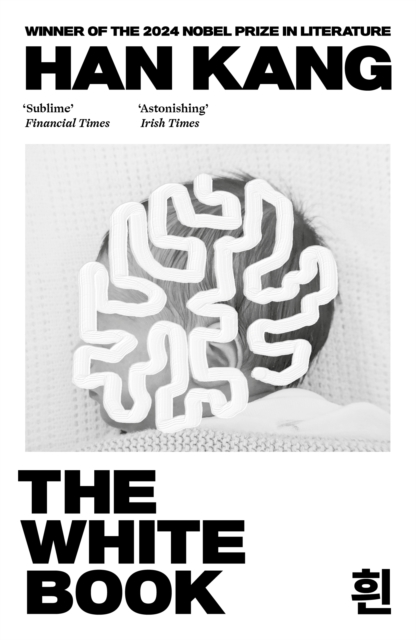
The White Book

Han Kang

Price range: £5.00 through £9.50
New

From the winner of the Man Booker International Prize for The Vegetarian Writing while on a residency in Warsaw, a city palpably scarred by the violence of the past, the narrator finds herself haunted by the story of her older sister, who died a mere two hours after birth. A fragmented exploration of white things - the swaddling bands that were also her shroud, the breast milk she did not live to drink, the blank page on which the narrator herself attempts to reconstruct the story - unfolds in a powerfully poetic distillation. As she walks the unfamiliar, snow-streaked streets, lined by buildings formerly obliterated in the Second World War, their identities blur and overlap as the narrator wonders, 'Can I give this life to you?'. The White Book is a book like no other. It is a meditation on a colour, on the tenacity and fragility of the human spirit, and our attempts to graft new life from the ashes of destruction. This is both the most autobiographical and the most experimental book to date from South Korean master Han Kang.

ISBN 9781850000000
Publisher Granta Books
Translated by Deborah Smith

We ship worldwide. For full shipping rates, delivery times and returns information, please visit our Shipping & Returns page

New copy in perfect condition.

Han Kang

Han Kang was born in Gwangju, South Korea, in 1970, the daughter of the novelist Han Seung-won. She grew up partly in Gwangju — a city whose name carries enormous historical and political weight in South Korea, as the site of the 1980 democratic uprising brutally suppressed by the military government — and partly in Seoul, where her family relocated when she was nine. She studied Korean literature at Yonsei University and began publishing fiction in the early 1990s, gradually building the body of work that would make her one of the most significant writers in the world.

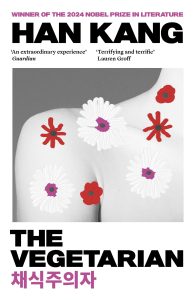
The Vegetarian, published in Korea in 2007 and translated into English by Deborah Smith in 2015, is the novel that first brought Han Kang to international attention. It follows Yeong-hye, a South Korean woman who decides to stop eating meat following a dream of extraordinary violence, and the effects of this decision on her marriage, her family, and ultimately her body. The novel is structured in three parts, each narrated by a different character surrounding Yeong-hye — her husband, her brother-in-law, her sister — so that we see the protagonist only from outside, through the perceptions of those who are disturbed by her. The decision to refuse meat becomes, in the novel's telling, a form of refusal so comprehensive it begins to encompass being human: Yeong-hye wants to become a plant, stationary, nourished by light. The novel won the International Booker Prize in 2016 in Smith's translation.

Human Acts, published in 2014, is her most politically direct and emotionally devastating work: a novel about the 1980 Gwangju Uprising and its aftermath, told through multiple perspectives across decades, which excavates the specific texture of state violence and its long psychological consequences. The novel is shattering and deliberately so — Han Kang has written about the research she undertook, including documentary material and interviews with survivors, and the difficulty of transforming that research into fiction without betraying it.

The White Book, a fragmented meditation on grief and her sister who died in infancy, demonstrates a more intimate and formally experimental register. The Nobel Prize in Literature, awarded to Han Kang in 2024, recognised the full scope of this body of work: 'for her intense poetic prose that confronts historical traumas and exposes the fragility of human life.' She was the first South Korean writer and the first Asian woman to receive the prize.

Read more from Han Kang

Readers Also Loved

More stories with a similar mood.