Han Kang was born in Gwangju, South Korea, in 1970, the daughter of the novelist Han Seung-won. She grew up partly in Gwangju — a city whose name carries enormous historical and political weight in South Korea, as the site of the 1980 democratic uprising brutally suppressed by the military government — and partly in Seoul, where her family relocated when she was nine. She studied Korean literature at Yonsei University and began publishing fiction in the early 1990s, gradually building the body of work that would make her one of the most significant writers in the world.
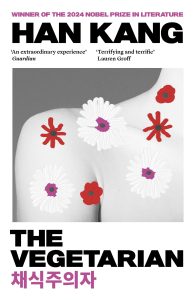
The Vegetarian, published in Korea in 2007 and translated into English by Deborah Smith in 2015, is the novel that first brought Han Kang to international attention. It follows Yeong-hye, a South Korean woman who decides to stop eating meat following a dream of extraordinary violence, and the effects of this decision on her marriage, her family, and ultimately her body. The novel is structured in three parts, each narrated by a different character surrounding Yeong-hye — her husband, her brother-in-law, her sister — so that we see the protagonist only from outside, through the perceptions of those who are disturbed by her. The decision to refuse meat becomes, in the novel's telling, a form of refusal so comprehensive it begins to encompass being human: Yeong-hye wants to become a plant, stationary, nourished by light. The novel won the International Booker Prize in 2016 in Smith's translation.
Human Acts, published in 2014, is her most politically direct and emotionally devastating work: a novel about the 1980 Gwangju Uprising and its aftermath, told through multiple perspectives across decades, which excavates the specific texture of state violence and its long psychological consequences. The novel is shattering and deliberately so — Han Kang has written about the research she undertook, including documentary material and interviews with survivors, and the difficulty of transforming that research into fiction without betraying it.
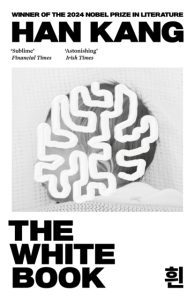
The White Book, a fragmented meditation on grief and her sister who died in infancy, demonstrates a more intimate and formally experimental register. The Nobel Prize in Literature, awarded to Han Kang in 2024, recognised the full scope of this body of work: 'for her intense poetic prose that confronts historical traumas and exposes the fragility of human life.' She was the first South Korean writer and the first Asian woman to receive the prize.