Back to books

Choose your copy

Current selection
Available
Currently unavailable
New
Pre Loved
Special

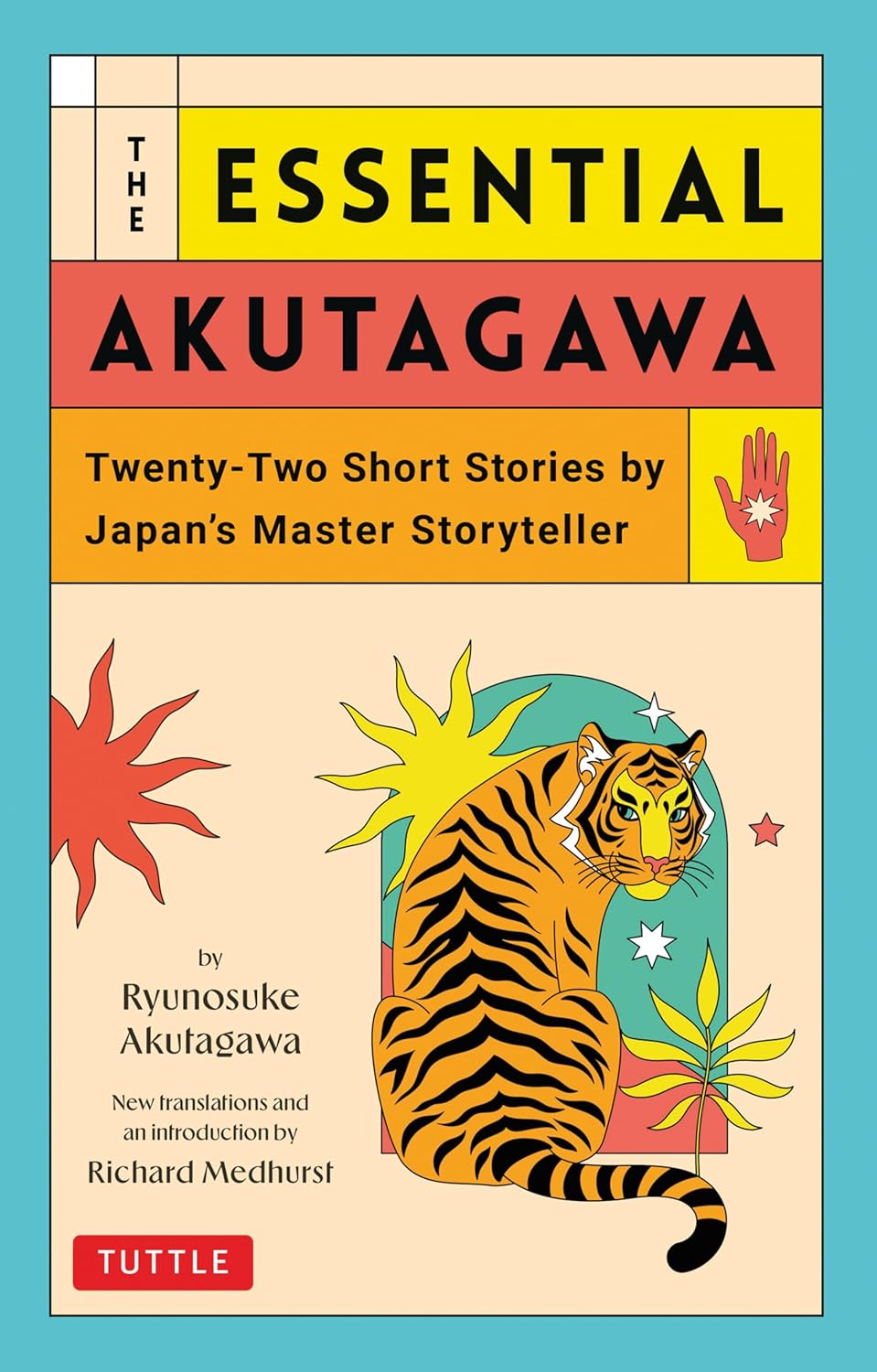
The Essential Akutagawa

Ryunosuke Akutagawa

£13.50
New •

"Akutagawa displays an insightful and keenly creative intelligence in prose so lucid its sophistication is hardly visible." —Chris Power, The Guardian.Japan's master storyteller Ryunosuke Akutagawa (1892 - 1927) wrote more than 150 short stories. Widely regarded as "the Father of the Japanese short story," he blended modern sensibilities with timeless themes to profound effect. This new anthology offers the most comprehensive collection of Akutagawa's work ever published in English.It features fresh translations of his most celebrated stories alongside many lesser-known and never-before-translated pieces:Rashomon: A destitute servant in old Kyoto faces a moral dilemma—starve or steal to survive An Odd Tale: A young woman is haunted by strange encounters with a station porter while her husband fights in World War I Shadows: A merchant receives anonymous letters about his wife's infidelity—only to come face-to-face with his own double In a Grove: Multiple, conflicting accounts of a samurai's death—this story inspired Kurosawa's legendary film Rashomon Hell Screen: A chilling tale of artistic obsession and its devastating cost, adapted from an ancient legendbMomotaro: In this first-ever English translation, Akutagawa transforms a beloved folk hero into a biting satire of nationalism and war Plus 16 other major works by the Japanese master!An essential volume for every serious reader of Japanese literature—and a captivating introduction to one of the world's great literary voices.

Binding Paperback
ISBN 9784805317990
Publisher Tuttle Publishing
Translated by Richard Medhurst

We ship worldwide. For full shipping rates, delivery times and returns information, please visit our Shipping & Returns page

New copy in perfect condition.

Ryunosuke Akutagawa

Ryunosuke Akutagawa was born in Tokyo in 1892 and was adopted by his maternal uncle shortly after birth — his mother having become mentally ill — taking the name Akutagawa from his adoptive family. He grew up in a household that was cultured, bookish, and engaged with both Japanese classical literature and Western modernism, and this dual inheritance shaped everything he wrote. He studied English literature at Tokyo Imperial University, where he began publishing fiction that attracted attention while he was still a student, and graduated in 1916 with a reputation already established.

His career was extraordinarily concentrated — he published most of his significant work in a period of about fifteen years before his death at thirty-five — and within that concentrated output produced a body of short fiction that is technically precise, psychologically penetrating, and formally adventurous in ways that remained influential for the entire subsequent history of Japanese literature. He worked across multiple modes: historical fiction set in the Heian period, contemporary psychological studies, satirical pieces, and experimental works that anticipate much later developments in postmodern fiction.

Rashōmon, published in 1915 and his most internationally famous single story, is set in a ruined city gate during a period of social collapse, and follows a servant displaced from his employment who steals from a woman stripping corpses of their clothes. The story poses the question of morality under survival pressure with a logical economy that is characteristic of Akutagawa at his best: the situation is constructed to make the question unavoidable, and the conclusion offers no comfortable resolution. In a Bamboo Grove, published in 1922, presents seven accounts of a single event — the death of a samurai, the assault of his wife — each from a different witness or participant, no two versions consistent, the truth systematically unavailable. Akira Kurosawa's 1950 film Rashōmon combines both stories and made them globally famous.

His final work, Cogwheels, written in the months before his death, is an autobiographical fragment of extraordinary intensity: a record of the hallucinations, paranoid episodes, and terror that preceded his suicide in 1927. He died of a deliberate overdose of Veronal at thirty-five, leaving a letter describing 'a vague unease about my future.' The Akutagawa Prize, established in 1935 and awarded twice yearly to the best short fiction by a new or emerging writer, is the most prestigious debut prize in Japanese literature and keeps his name perpetually attached to the Japanese literary tradition he helped define.

Read more from Ryunosuke Akutagawa

Readers Also Loved

More stories with a similar mood.