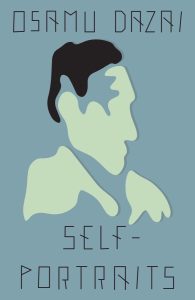
Osamu Dazai was born Shūji Tsushima in 1909 in Kanagi, a small town in Aomori Prefecture in northern Japan, the tenth child of a wealthy landowner family. The gap between his privileged origins and the condition of dissolution and debt that would define his adult life is one of the central paradoxes of his biography and of his work, which is so thoroughly autobiographical that reading his fiction and reading about his life become overlapping activities. He entered Tokyo Imperial University to study French literature — an aspiration toward European modernism visible throughout his writing — but became increasingly drawn to leftist politics, involvement with a geisha, attempted suicides, opium and alcohol dependency, and the writing of fiction that processed all of these experiences with a devastating, self-lacerating directness.
His prose voice is one of the most immediately recognizable in Japanese literature: a first-person address of disarming intimacy and unreliability, simultaneously confessional and theatrical, that invites the reader into the narrator's self-perception while constantly undercutting the possibility of taking that self-perception at face value. The narrators of Dazai's fiction are always, in various ways, performing their own destruction — conscious of how they appear, monitoring the reader's response, using confession as a form of seduction or self-justification. This makes for reading that is both deeply engaging and profoundly uncomfortable, as intended.
No Longer Human, published in 1948 shortly before his death, is the distillation of this technique into a work of extraordinary power: the notebook of a man — Ōba Yōzō — who has always felt fundamentally incapable of human connection, who has spent his life performing the facial expressions and social behaviors expected of him while inwardly understanding nothing, and whose attempts to find a way to exist have destroyed him. The novel is one of the best-selling works of fiction in Japanese history, continuously in print since its publication, and continues to resonate with readers — particularly young readers — who recognize in its protagonist something of their own sense of alienation.
The Setting Sun, his other major novel, is a cooler, more controlled work: the story of an aristocratic family's collapse in postwar Japan, observed through the perspective of a daughter watching her mother's dignity and her brother's self-destruction. Dazai died in a suicide pact in 1948 at the age of thirty-eight, his body found in the Tamagawa canal days after he was reported missing. The anniversary of his death — June 19th, his birthday — is marked annually at the site where his body was found.