
Back to books

Choose your copy

Current selection
Available
Currently unavailable
New
Pre Loved
Special

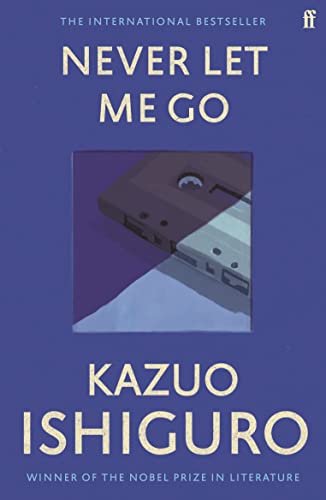
Never Let Me Go

Kazuo Ishiguro

Price range: £4.00 through £7.50
New

From the Booker Prize-winning author of The Remains of the Day and When We Were Orphans, comes an unforgettable edge-of-your-seat mystery that is at once heartbreakingly tender and morally courageous about what it means to be human. Hailsham seems like a pleasant English boarding school, far from the influences of the city. Its students are well tended and supported, trained in art and literature, and become just the sort of people the world wants them to be. But, curiously, they are taught nothing of the outside world and are allowed little contact with it. Within the grounds of Hailsham, Kathy grows from schoolgirl to young woman, but it?s only when she and her friends Ruth and Tommy leave the safe grounds of the school (as they always knew they would) that they realize the full truth of what Hailsham is. Never Let Me Go breaks through the boundaries of the literary novel. It is a gripping mystery, a beautiful love story, and also a scathing critique of human arrogance and a moral examination of how we treat the vulnerable and different in our society. In exploring the themes of memory and the impact of the past, Ishiguro takes on the idea of a possible future to create his most moving and powerful book to date.

ISBN 9780570000000
Publisher Faber and Faber

We ship worldwide. For full shipping rates, delivery times and returns information, please visit our Shipping & Returns page

New copy in perfect condition.

Kazuo Ishiguro

Kazuo Ishiguro was born in Nagasaki, Japan, in 1954, the son of an oceanographer. When he was five, his father was invited to work at the National Institute of Oceanography in Surrey, and the family relocated to England with the intention of returning within a few years. They never did. Ishiguro grew up in England, educated at the University of Kent and the University of East Anglia — where he studied creative writing under Malcolm Bradbury and Angela Carter — and became British in experience and literary formation while remaining, in some indefinable way, profoundly shaped by a Japan he left too early to properly remember. This condition — the imaginative reconstruction of an origin that cannot be directly recalled — is the subject of his first two novels and haunts all the work that follows.

His early novels, A Pale View of Hills and An Artist of the Floating World, are set in Japan and concern characters reckoning with personal and national histories in the aftermath of the Second World War. They are formally controlled works of great emotional restraint, establishing the narrative technique that would define Ishiguro's career: the unreliable first-person narrator who tells us, with apparent completeness and sincerity, a version of their own history that gradually reveals itself to be incomplete, self-serving, or constructed to avoid a truth too painful to face directly.

The Remains of the Day, published in 1989 and winner of the Booker Prize, is his masterwork and one of the most celebrated British novels of the twentieth century. Stevens, an elderly English butler, takes a rare motoring holiday through the West Country while reconstructing the decades he spent in service to a lord who turned out to be a Nazi sympathiser. The novel is built from what Stevens cannot bring himself to say: his love for a housekeeper, his knowledge of his employer's true politics, his understanding of his own waste. It is a work of devastating formal precision. Never Let Me Go — set in an alternative England where a class of children have been created for the specific purpose of donating their organs — extends these techniques into science fiction with devastating effect.

Ishiguro was awarded the Nobel Prize in Literature in 2017. His subsequent novel, Klara and the Sun, narrated by an artificial friend, continues his exploration of consciousness, memory, and what it means to love something or someone when you know the relationship must end.

Read more from Kazuo Ishiguro

Readers Also Loved

More stories with a similar mood.