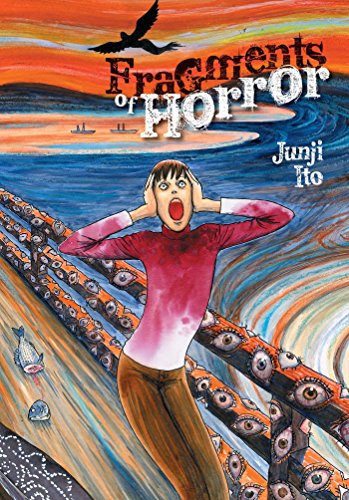
Junji Ito was born in 1963 in Gifu Prefecture, Japan, in a house adjacent to a mortuary — a biographical detail he has offered in interviews with characteristic dry matter-of-factness as a possible early influence on his imagination. He studied dentistry and worked as a dental technician for several years while drawing manga as a hobby, submitting work to competitions in his spare time. He won the Umezu Kazuo Prize in 1987 for Tomie, the story of an impossibly beautiful girl who regenerates from death and drives every man who encounters her to murder and obsession. It was published in a horror manga magazine, and Ito's career — and one of horror fiction's most distinctive voices — was born.
Ito's work is defined by a very specific aesthetic of dread: the uncanny, the inexplicable, and the cosmically indifferent visited upon ordinary people in ordinary places. He is not a gore artist, though his work contains graphic imagery. He is a dread artist — someone who understands that the most effective horror is not what happens but what might happen, not the monster revealed but the shape moving in the peripheral vision. His visual language is meticulous and obsessive: the dense crosshatching, the anatomically precise distortions, the faces caught mid-transformation between human and something else entirely. Looking at a Junji Ito page long enough, you begin to feel that the panel borders themselves are about to collapse.
His masterwork is Uzumaki, serialized from 1998 to 1999: a town in Japan becomes infected by an obsession with spirals — in the clouds, in the water, in people's bodies, in the town's own geography. It is a work of sustained, escalating horror that also functions as something stranger and more philosophical: a meditation on pattern, on repetition, on the way an idea can consume a person or a place. Gyo, about mechanical fish walking on land spreading a death stench, is more conventionally nightmarish. Tomie, collected across many volumes, is a feminist body horror of disturbing complexity. His short story collections — including Dissolving Classroom, Shiver, and Smashed — contain some of the most individual horror fiction produced anywhere in the world.
Ito is a devoted fan of Western horror literature, particularly H.P. Lovecraft, Ramsey Campbell, and Stephen King, as well as the work of his Japanese predecessor Kazuo Umezu, whose influence is visible in his character designs. He has adapted Lovecraft's work directly and collaborated with other creators across various projects. Despite his fame, he retains an air of gentle bemusement at the global appetite for his nightmares, and his occasional author notes — written with cheerful domesticity about his cats — are beloved by fans as a comic counterpoint to the horrors between the pages.