Haruki Murakami was born in Kyoto in 1949 and raised in Kobe, the son of a Japanese literature teacher. He studied drama at Waseda University in Tokyo, where he met his wife Yoko, and the two ran a small jazz bar called Peter Cat in Tokyo's Kokubunji district throughout the 1970s. The bar would leave a permanent mark on Murakami's fiction: jazz, whisky, and the particular texture of late-night city life permeate his work with the authority of lived experience. He began writing his first novel, Hear the Wind Sing, on the kitchen table after watching a baseball game in 1978, struck suddenly by the conviction that he could write. He was twenty-nine.
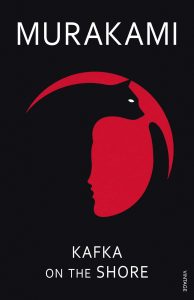
What followed is one of the most remarkable careers in contemporary world literature. Murakami's novels — Norwegian Wood, The Wind-Up Bird Chronicle, Kafka on the Shore, 1Q84, and many others — have been translated into more than fifty languages and sold tens of millions of copies globally. He works in a mode entirely his own: realist surfaces opening into surrealist depths, populated by solitary protagonists who drift through nocturnal cityscapes listening to records and cooking simple meals while mysterious forces reshape their worlds from within. His fiction is preoccupied with memory, loneliness, identity, and the unconscious — the gap between what we feel and what we can say, between the life we live and the life that happens to us in dreams.
Murakami spent much of the 1980s and 1990s living outside Japan — in Europe and the United States — and this distance shaped his outsider perspective on Japanese society. He has spoken of feeling alienated from the Japanese literary establishment, which initially received his work with scepticism, finding it too Western, too pop-inflected. International readers came to him first; Japanese literary recognition followed later. He is now frequently cited as a Nobel Prize candidate, and the annual speculation surrounding the announcement has become something of a cultural event in itself.
Beyond fiction, Murakami is a prolific essayist, memoirist, and translator — having brought into Japanese the work of Raymond Carver, F. Scott Fitzgerald, Tim O'Brien, and many others. He has written about marathon running (What I Talk About When I Talk About Running), about the Tokyo subway sarin attack (Underground), and about his own listening habits across thousands of records. He is a devoted runner who has completed dozens of marathons, and has spoken of the discipline of running as inseparable from the discipline of writing long fiction. He lives quietly with his wife and cats, rarely gives interviews, and continues to write every morning.