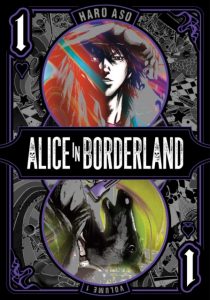
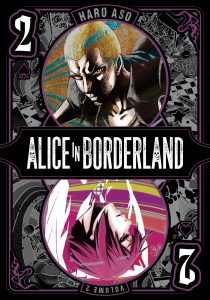
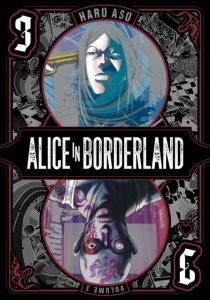
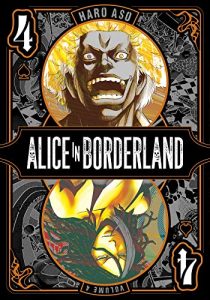
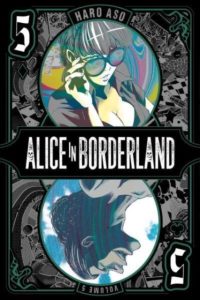
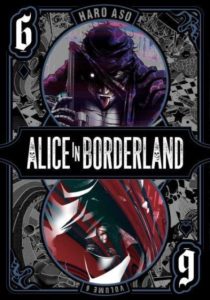
Haro Aso is a Japanese manga writer who began his career with shorter projects before finding his audience with survival horror: a genre that has proven consistently popular in manga because its procedural structure — rules, violations, consequences — maps naturally onto the form's episodic rhythm, and because the extreme situations it creates reveal character under pressure in ways that other genres cannot easily replicate.
Alice in Borderland, his major work, began as a self-published web manga in 2010 before commercial serialization in the magazine Jump+ from 2012 to 2016. Its premise is a version of the 'mysterious deserted world' that has appeared in Japanese horror fiction repeatedly since Koushun Takami's Battle Royale: Ryōhei Arisu — the English transliteration of his name, Alice, gives the series its title — finds himself in a Tokyo emptied of people, where survival depends on playing games of increasing deadliness organized by mysterious unseen authorities. The games are classified by playing card suits: clubs for physical challenges, diamonds for logic, spades for athletic competitions, hearts for psychological manipulation. Working out the rules and finding a way through them becomes the series' procedural engine.
What distinguishes Alice in Borderland from the genre's many lesser entries is the quality of its game design and the consistency of its internal logic. The situations Aso constructs are not arbitrarily cruel but elaborately engineered to reveal specific things about human nature under pressure — cooperation, deception, sacrifice, the mathematics of collective survival. The series also gives its characters sufficient interiority that their choices within the games feel character-consistent rather than mechanically determined by plot needs.
The live-action Netflix adaptation in 2020, produced with high production values and casting against the manga's younger-skewing aesthetic with adult protagonists, became one of the platform's most watched non-English language series globally, running to a second season in 2022. The international success introduced Aso's work to audiences unfamiliar with survival horror manga, and the critical response — which compared the series favourably to Western examples of the genre — demonstrated that the material's appeal transcended its original cultural context.