Natsuo Kirino was born in Kanazawa in 1951 and worked in various fields before establishing her career as a fiction writer in the late 1980s. She published romances and genre fiction before developing the voice and subject matter that would make her internationally significant: a forensically observed, politically aware crime fiction that uses the genre's conventions to examine the structural conditions of women's lives in contemporary Japan. The Grand Prix for Crime Fiction awarded to Out in 1998 was the moment her work achieved the recognition it had been building toward.
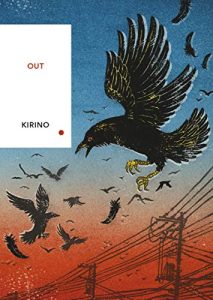
Out is her landmark novel, and it remains one of the most important crime novels produced in Japan or anywhere else in the past thirty years. Four women work the night shift at a bento factory on the outskirts of Tokyo — a precise environment rendered in exhausting physical detail, the fluorescent lights, the cold, the repetitive movements, the sense of time passing in a different way than it does in the daylight world. When one of the women strangles her abusive husband in a moment of desperate self-preservation, the others agree to help her dispose of the body. The novel follows the consequences of this choice with unflinching attention to the way each woman's specific situation — economic precarity, domestic violence, social isolation — shapes both her decision to help and what happens afterward.
What distinguishes Out from conventional crime fiction is the quality of its attention to the systemic forces that produced the situation. Kirino is not primarily interested in the investigation (there is a detective, but he is not the centre of the story) but in the social and economic architecture that creates the conditions under which violence becomes possible or necessary. The women of Out are not heroines, exactly, but they are not villains either: they are people trapped in circumstances that offer no clean options, and Kirino's fierce, compassionate attention to their specific traps is the novel's moral and artistic achievement.
Grotesque, published in 2003, extends this political project through an equally dark lens: the novel follows the murders of two women who worked as prostitutes, exploring through extensive first-person narration the social conditions and personal histories that brought them to that work. Villain and Nami no To demonstrate Kirino's range within darker registers. She is one of the most significant crime writers working anywhere in the world.