

Back to books

Choose your copy

Current selection
Available
Currently unavailable
New
Pre Loved
Special

The Menu of Happiness

Hisashi Kashiwai

Price range: £10.50 through £14.50
New

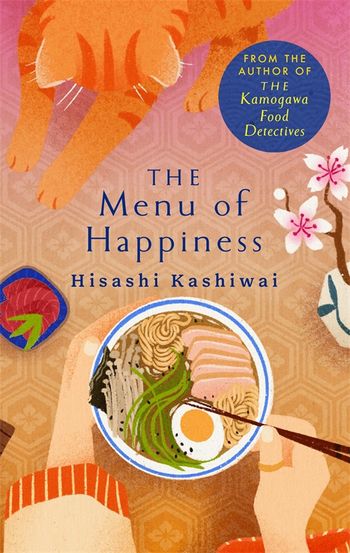
The Menu of Happiness, translated from Japanese by Jesse Kirkwood, is the third book in the bestselling, delightful Japanese sleuthing series for fans of Before the Coffee Gets Cold. Welcome to the Kamogawa Diner, where every meal is a mystery ready to be solved. This unique establishment is run by a father–daughter duo who offer more than just mouth-watering meals.They act as ‘food detectives’, delving into the past to produce nostalgia-infused dishes for their hungry clientele. Among the patrons is a once-renowned pianist whose promising career was marred by a self-inflicted injury. She longs to taste the yakisoba shared with the only man she ever truly loved.The diner also welcomes a man haunted by shadows of regret. His mind races back to the gyoza served by the parents of a lover he once jilted, as he seeks understanding and, perhaps, forgiveness. The Kamogawa Diner doesn’t just serve food – it revives the essence of forgotten recipes and rejuvenates cherished memories.Each dish is a portal to the past, serving not just sustenance but solace and reconnection through the miracle of delicious food. The Menu of Happiness follows on from The Kamogawa Food Detectives and The Restaurant of Lost Recipes. ‘Feel-good and foodie themes collide in this follow-up to The Kamogawa Food Detectives’ - The TimesThe Menu of Happiness was a Japanese bestseller when it published w/c 04/01/2016

ISBN 9781035060726
Publisher Pan Macmillan
Translated by Jesse Kirkwood

We ship worldwide. For full shipping rates, delivery times and returns information, please visit our Shipping & Returns page

New copy in perfect condition.

Hisashi Kashiwai

Hisashi Kashiwai is a Japanese novelist whose work combines the pleasures of cozy mystery with an unusually deep and genuine engagement with food culture, the specific atmosphere of Kyoto, and the emotional resonances that particular dishes carry for the people who remember them. His Kamogawa Food Detectives series, published from 2013 onwards, has found a devoted readership in Japan and subsequently internationally for its warm, quietly melancholy approach to what sounds, on the surface, like a simple premise.

The Kamogawa Diner of the series title is a small, unnamed restaurant in Kyoto — its location beside the Kamogawa river giving it the name by which its regulars know it — run by a father and daughter whose culinary skills extend beyond the ordinary. Clients come to the diner not merely to eat but to request a specific dish: a meal from memory, a taste that carries within it a particular moment or relationship from the past. The father and daughter research these dishes with the thoroughness of detectives, tracking down recipes, ingredients, and the culinary traditions of specific times and places, and then prepare them. The emotional core of each story lies in what the dish meant to the person who requested it — the memory it unlocks, the relationship it honours or mourns.

The premise is essentially a mechanism for approaching grief and memory through the concrete, material pleasure of food, and Kashiwai executes this mechanism with considerable craft. The food writing itself — the descriptions of preparation, the specific sensory qualities of the dishes, the historical and cultural contexts in which they developed — is genuinely informative and evocative, reflecting research that goes beyond genre requirement. The stories are emotionally calibrated carefully: moving without being manipulative, the pleasure of food providing a slight warmth against the more difficult emotions the series consistently explores.

The international publication of the series has been received warmly by readers who appreciate both its food content and its Kyoto atmosphere — the city rendered through the eyes of people deeply embedded in its particular rhythms of seasonal change, cultural ritual, and the continuity of craft traditions. It represents, at its best, the kind of fiction that can only be written from inside a deep familiarity with a place and its culture.

Read more from Hisashi Kashiwai

Readers Also Loved

More stories with a similar mood.